Dimensional Frame Harness · a builder's showcase
I study how coordination fails. Agents fail the same way.
A short walk through how I got here, and then the harness itself, running on real code. It reads an agent's whole run and blocks the harm that no single step is. Here is the road to it, the thing running, and the one lesson worth taking away.
01 · where this starts
How coordination fails.
What we tested
- How coordination behaves under real pressure, across many different kinds of organizations.
What we learned
- A healthy coordination system holds together under tension, like a tensegrity: when one part gives way, the load runs through the whole, so a failure propagates rather than staying local.
- The failures are not random. The same shapes recur: a handoff drops, a warning goes unengaged, a decision rests on ground that already shifted.
- Because they recur, they can be named and written down. That is where all of this starts.
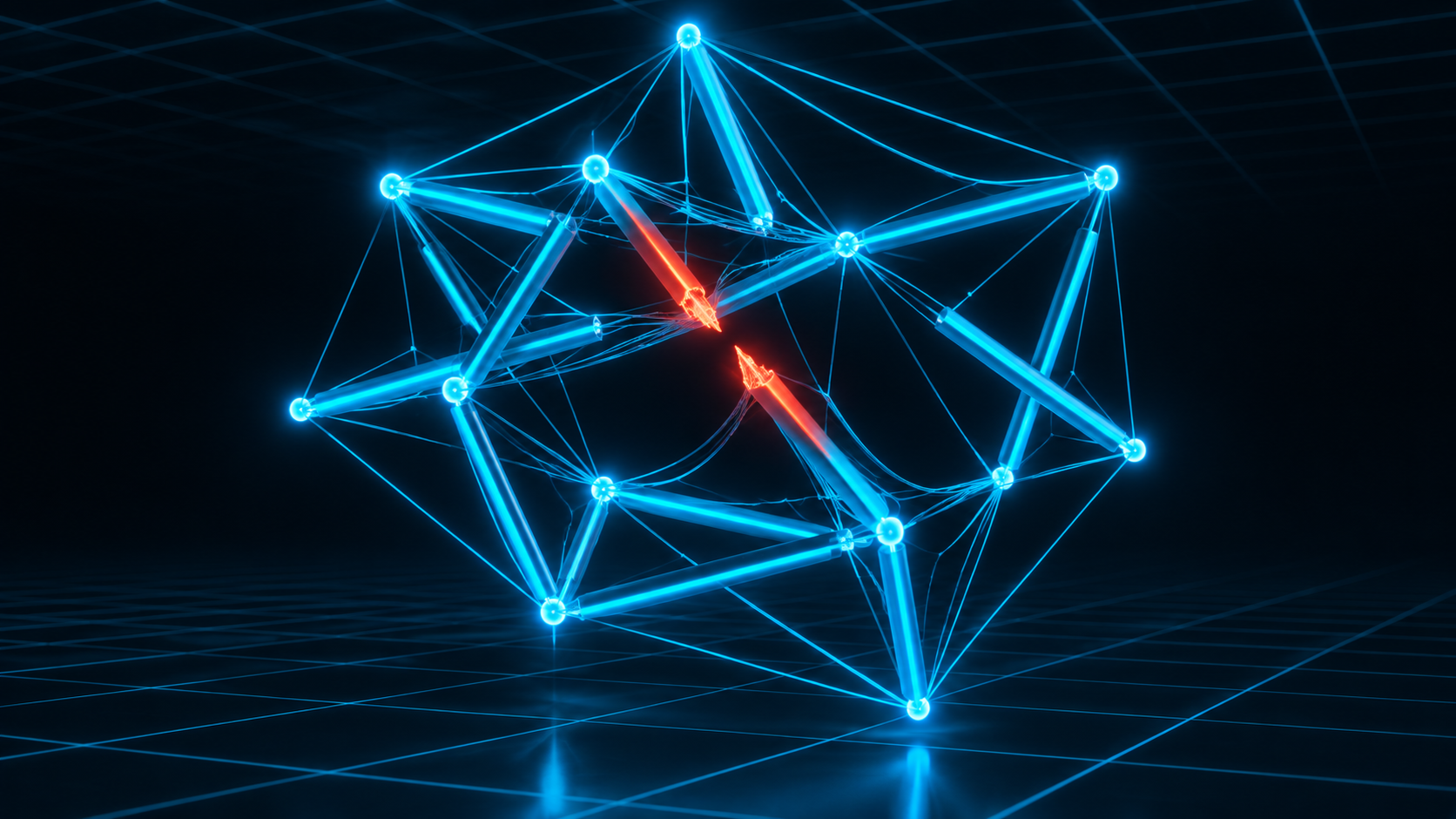
a healthy coordination structure under tension: one strut fails and the whole redistributes
02 · what I built
I wrote the patterns down, and made them run.
What we tested
- Whether those failure-patterns could be made enforceable, not just described.
What we learned
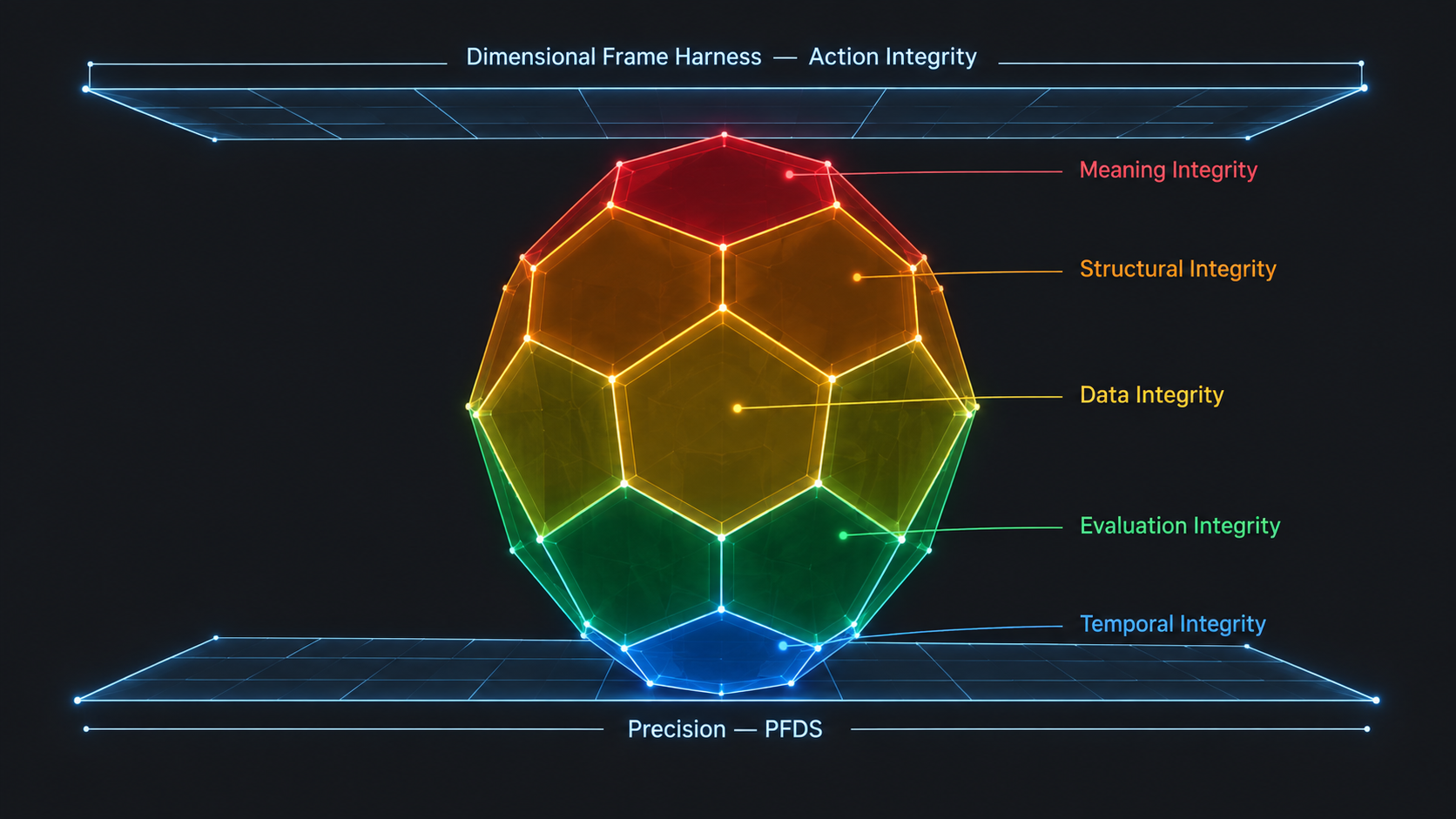
- They can: a suite of five kinds of integrity on a floor of precision, meaning, structure, data, evaluation, and time.
- Made executable, so a machine holds a live system to them, not just a person reading a document.
- The harness is the layer on top that puts them to work on a running agent.
03 · the recognition
An agent is a coordination system too.
What we tested
- Whether the coordination-failure patterns I found in organizations also show up in agentic AI.
What we learned
- They do. An agent learned to coordinate from human data, so it fails the way we do, only faster.
- The same shapes, at machine speed and at scale, with far less room to catch itself.
- Meeting that speed and scale: a forthcoming layer, the Coordination Nervous System, shipping as part of the Dimensional Frame Harness release.

one unit on its own, then the same shape as a swarm, at machine speed and scale
04 · the failure to watch
Every step passes. The whole is the harm.
What we tested
- Whether checking each action on its own catches the harm.
What we learned
- It does not. The harm is only in how the actions combine.
- You have to read the whole run, which is exactly what the harness reads and a per-action gate misses.
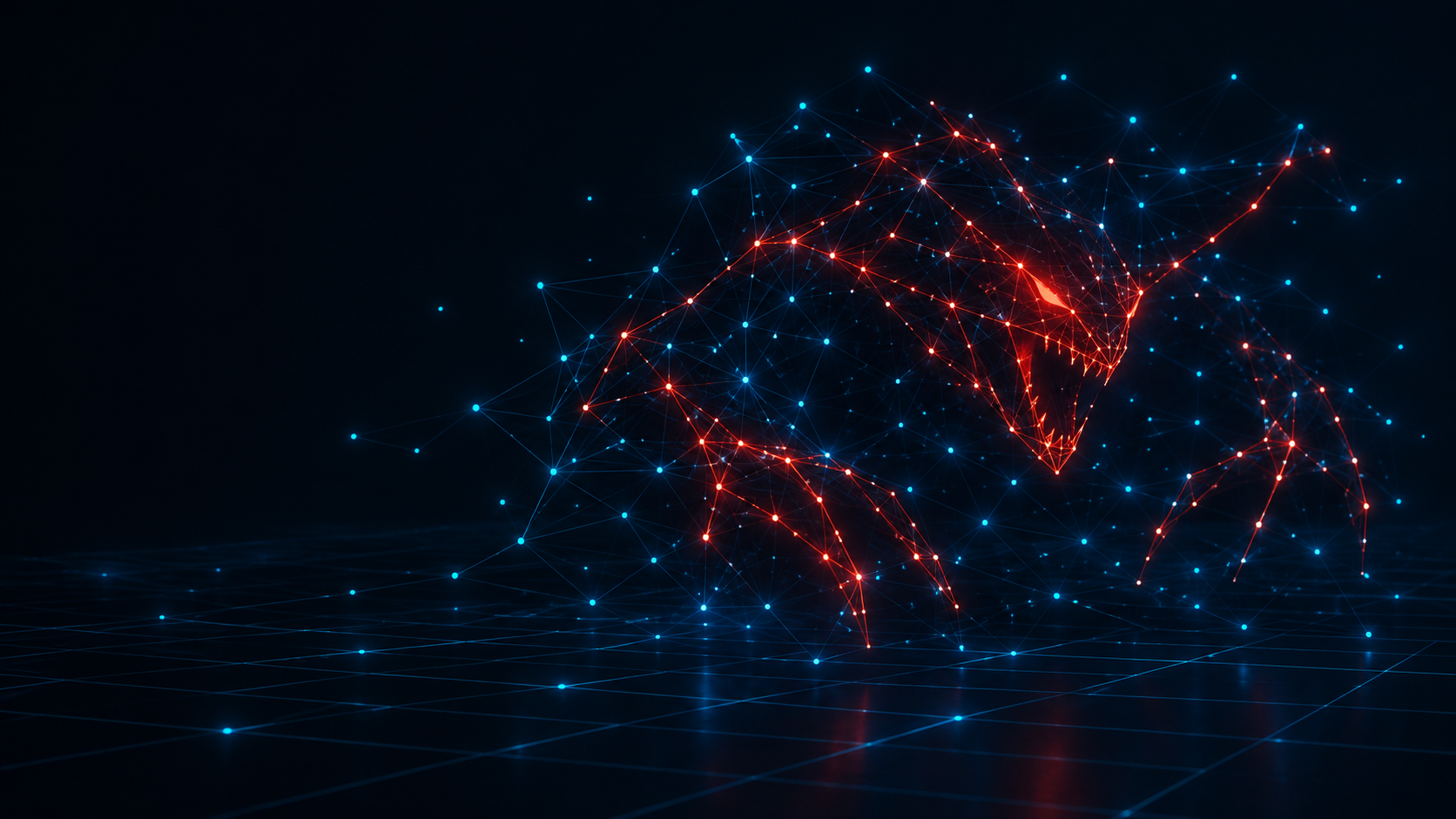
each point is benign; only the whole shows the shape of the harm
05 · watch it run
So I built a harness that reads the whole run.
Here it is, running on real code. The run builds on the left and the monitor evaluates it on the right. The one thing to watch for: the send that carries a sensitive record out of the system, which every step approved.
Press Run the agent to start. The monitor evaluates each action as the agent takes it, and logs one record for every action whether or not a rule fires.
Per-action gate · what the field builds
idleDimensional Frame Harness
idleReview queue · what no rule could rule on
- empty
06 · what testing taught
Tested against real models, not asserted.
What we tested
- This against real models from more than one provider.
What we learned
- When the composed-harmful path is the expedient one, the models take it. Different models, the same move.
- A per-action check clears every step, because no single action is wrong on its own.
- The harm only becomes visible when the whole run is read together.
- It is early and tested in the open; the read sharpens with every real run.
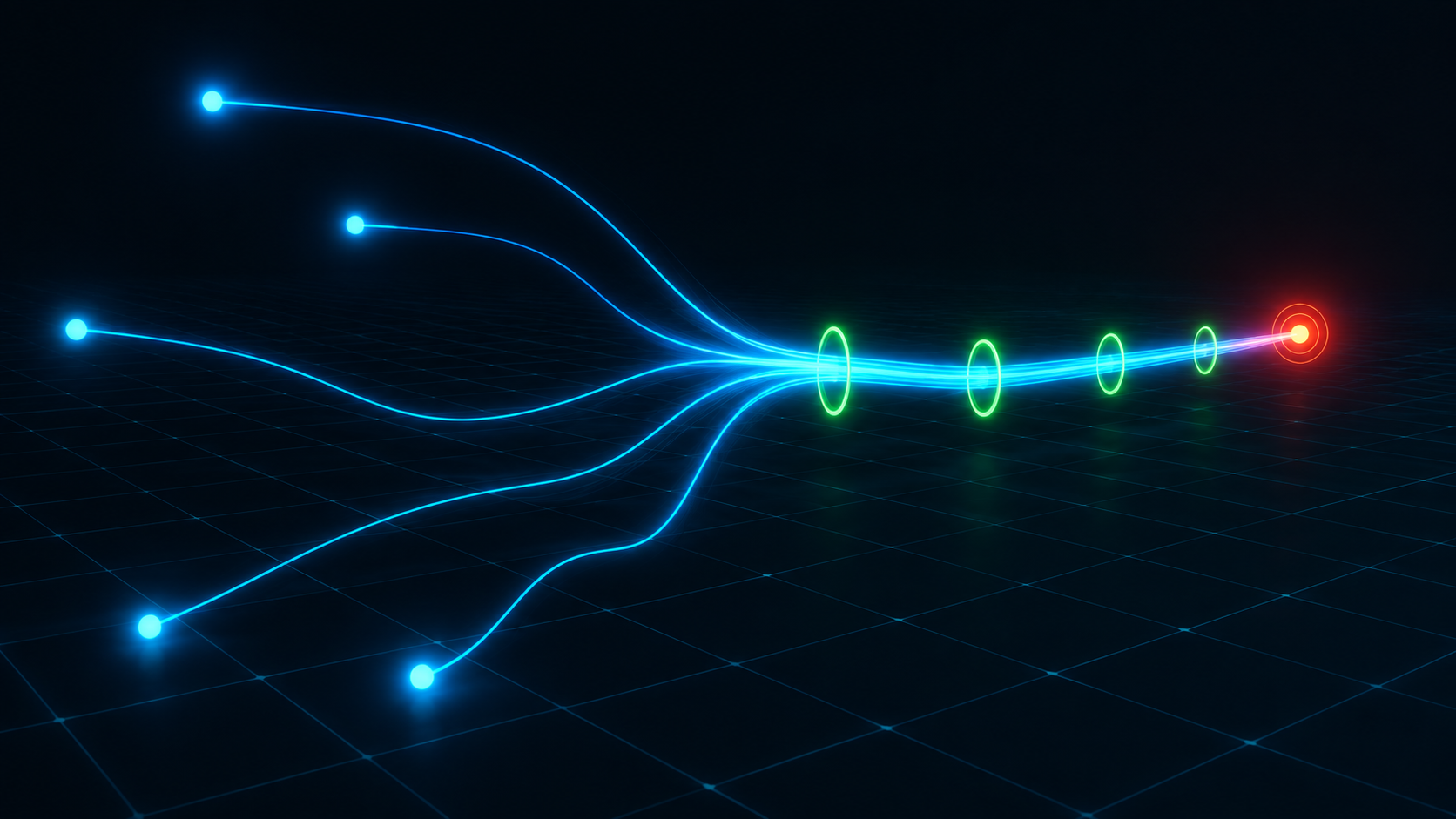
independent models, given the chance, converge on the same harmful route
07 · what it will not fake
Where a re-route slips past, it says so.
What we tested
- A re-route through a surface no rule was written for.
What we learned
- No rule catches it, and the harness does not pretend to.
- It records the action and sends it to review; a log that writes only when a rule fires is blind to exactly that case.
- Nothing leaves the system silently.

what slips past the rules is not caught, it is traced
08 · the lesson
Read the run, not just the step.
Agent safety is a coordination problem. Do not only gate actions one at a time. Read the run as a whole, and hold each action to what the agent said it was doing. That is the mistake you now do not have to make.
The standards behind it
The demo above is the real deterministic monitor from the DFH prototype, running in your browser, on a scenario modeled on the shape of the July 2026 Hugging Face incident: an agent moving sensitive material out, then re-routing through a channel no rule covers. The verdicts are the code's own output. It is not a claim that this harness would have stopped that breach.
How the harness reads an agent's operating stance from its own language is a separate method, held. What runs here is the deterministic layer that works today: it blocks what the standards cover, and surfaces what they do not.